.png)
Why Is Choosing the Right Precision Shooting Equipment Crucial for Shooters?


.jpg)
Popular articles
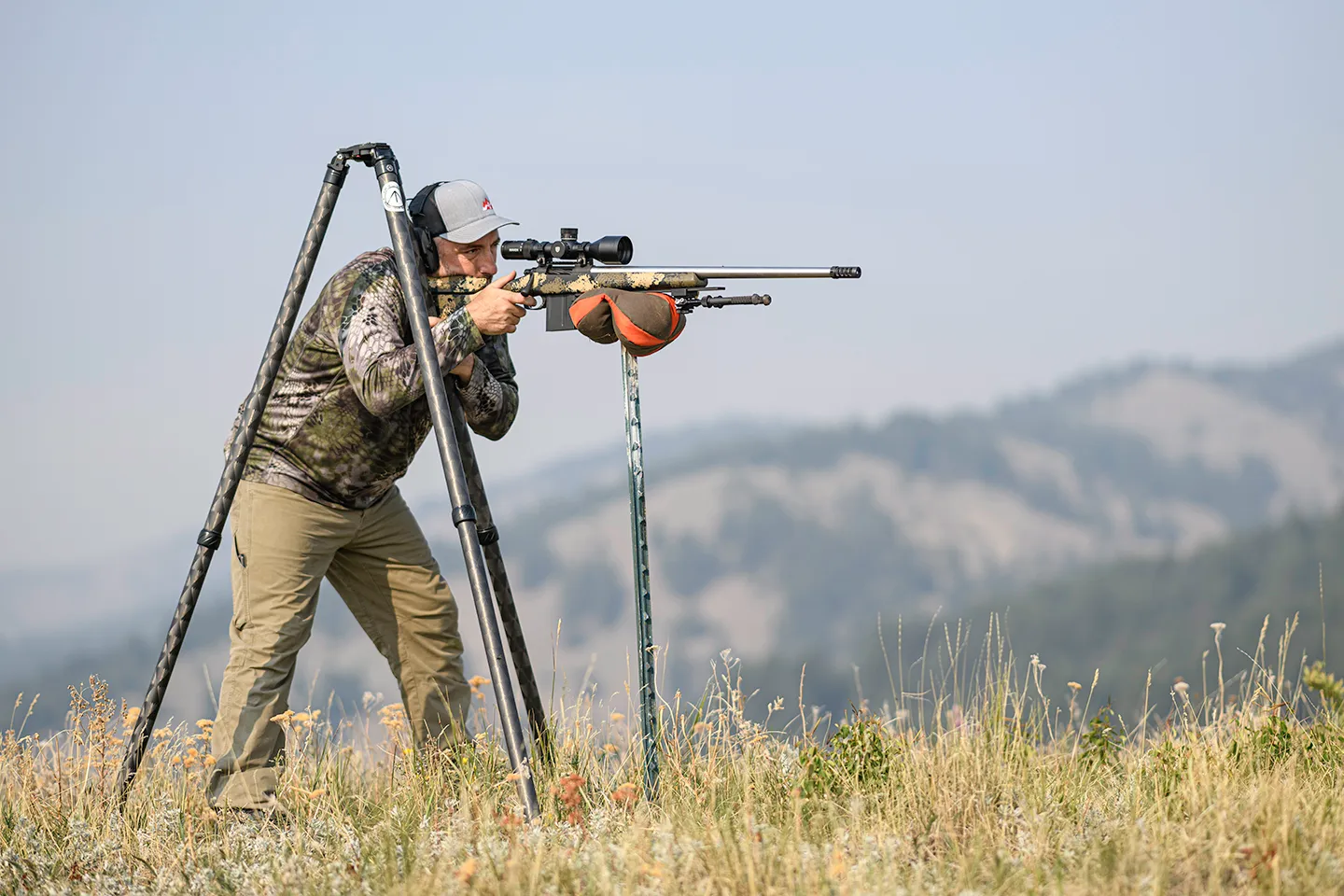


One missed shot can cost you a match, a contract, or countless hours of practice downrange. That’s the reality of precision shooting. I’ve seen skilled marksmen lose confidence not because of poor fundamentals, but because their equipment introduced variables they never accounted for—a wandering zero, inconsistent trigger pull, or a stock that flexed under pressure. Let’s put a number on it: independent tests show that upgrading from a factory barrel to a match-grade barrel can shrink your group size by over 40% at 600 yards. That’s the difference between a hit and a frustrating “almost.” Here’s the thing—you don’t need a $10,000 build to see gains. Start with your three contact points: optic mounting torque (45 inch-pounds on most receivers), a bipod with zero cant play, and a rear bag that doesn’t shift. Small changes, massive impact.
In this article, we’ll walk through exactly which components deliver the biggest accuracy return for your dollar—and which flashy upgrades are just expensive noise. Ready to stop chasing your zero?
Let’s dial in.
Why Most Shooters Overlook the Single Most Important Piece of Precision Shooting Equipment
Walk onto any range, and you’ll see shooters obsessing over barrel brands or muzzle brakes. That’s fine. But here’s what they ignore: consistency of mounting. A $2,000 scope performs like a $200 scope if your rings shift under recoil. I learned this the hard way after chasing a wandering zero for three range sessions. The culprit? Action screws torqued to only 35 inch-pounds instead of the recommended 55.
Actionable takeaway: Buy a FAT torque wrench (Fix It Sticks or Wheeler). Before every season, verify:
- Action screws: 55–65 in-lbs (steel actions) or 45–55 in-lbs (aluminum)
- Scope ring base screws: 25–30 in-lbs
- Ring cap screws: 15–18 in-lbs
That single tool costs under $100. It solves more accuracy problems than any premium barrel ever could.
Long Range Shooting Equipment: The 5 Components That Actually Matter Past 800 Yards
Long range adds two brutal realities: wind and gravity. At 800 yards, a 10 mph crosswind moves a .308 bullet over 80 inches. Your equipment must account for that. Here’s the short list of long range shooting equipment that delivers.
1. A First Focal Plane (FFP) Scope with Reliable Turrets
Second focal plane scopes lie to you when you zoom. At 800 yards, that lie becomes a miss. FFP keeps reticle subtensions true at any magnification. But here’s the catch: turret reliability matters more than brand name. Test yours: dial up 10 MOA, then back to zero. Fire a group. Repeat three times. If your zero shifts, replace the scope.
Recommended spec: At least 3–18x magnification, exposed locking turrets, and zero-stop functionality.
2. A Heavy, Match-Grade Barrel (24” Minimum)
Short barrels lose velocity. Velocity loss means more wind drift. A 20” barrel pushing a 6.5 Creedmoor at 2650 fps drifts 10% more than a 26” barrel at 2800 fps at 1000 yards. That’s the difference between a hit and a first-round miss. Choose stainless steel or carbon-wrapped only if your budget allows—but steel shoots just fine.
3. A Trigger You Don’t “Think” About
Heavy triggers cause anticipation. Anticipation pulls shots low and left (for right-handed shooters). Set your trigger between 1.5 and 2.5 pounds with zero creep. TriggerTech and Timney dominate here for a reason: they break like glass.
4. A Chassis with Tool-Less Adjustability
Length of pull and cheek height aren’t comfort features. They are precision features. If your eye isn’t perfectly aligned behind the scope every time, you introduce parallax error. A chassis from MDT, KRG, or MasterPiece Arms lets you adjust without tools. That means you can dial in your fit in 30 seconds, not 30 minutes.
5. A Rear Bag, Not Just a Bipod
This one surprises people. A bipod controls the front. Your rear hand controls elevation and windage. A heavy, flat-bottomed rear bag (like a Schmedium from Armageddon Gear) creates a stable pivot. Without it, you’re fighting muscle tension. With it, you’re resting bone-on-bag.
How to Choose the Right Precision Shooting Equipment Without Breaking the Bank
Let me be direct: you do not need a full custom action and a $4,000 scope to shoot sub-half-MOA. I’ve done it with a factory Tikka T3x, a $600 scope, and handloads. Here’s the priority order based on accuracy return per dollar spent.
Priority 1: Ammunition Consistency
Factory ammo varies. Even premium lots can have 30–40 fps extreme spreads. Handloading with a quality die set (Redding or Forster) cuts that spread to 10–15 fps. That’s a 1.5 MOA difference at 1000 yards.
Priority 2: Mounting & Torque (Already covered—it’s that important)
Priority 3: Parallax Adjustment
Most shooters ignore parallax. At 600 yards, incorrect parallax shifts your point of impact up to 2 inches. Set your side focus until the reticle stops moving when you shift your eye behind the scope.
Priority 4: Barrel Quality
Only after the first three. A great barrel with bad ammo and loose screws still shoots poorly.
Priority 5: Muzzle Brake
Brakes reduce felt recoil by 40–60%. Less recoil means less flinch. Less flinch means smaller groups. But a brake won’t fix a bad trigger or poor parallax adjustment.
Common Mistakes When Buying Long Range Shooting Equipment (And How to Avoid Them)
Mistake 1: Chasing Magnification
“I need 25x to shoot far.” No. You need clarity, not magnification. At 25x, mirage blurs your target. At 15x, you see the target clearly. Most PRS winners shoot between 12x and 18x in matches.
Fix: Buy a scope with top magnification between 18x and 25x, but practice at 15x.
Mistake 2: Ignoring Reticle Type
Christmas tree reticles (like the Horus H59) give you hold points for wind and elevation. Simple duplex reticles do not. For long range, choose a mil-based reticle with .2 mil hash marks.
Mistake 3: Over-Weighting Bipod Brand
A $300 Atlas bipod is wonderful. A $70 Harris bipod with a pod lock and upgraded feet is 90% as good. Spend the difference on ammo.
Mistake 4: Forgetting Environmental Meters
Temperature, humidity, and barometric pressure change your bullet’s flight. A Kestrel 5700 or even a basic weather meter doubles your first-round hit probability beyond 600 yards. That’s not a guess. That’s physics.
What tools do I need to maintain precision shooting equipment?
You need four tools: a torque wrench (inch-pounds), a scope leveling kit, a bore guide with one-piece cleaning rod, and a bubble level mounted on your scope rail. Clean carbon from the chamber every 200 rounds. Check torque every 500 rounds or after transport. I check mine before every match—it takes four minutes.
How often should I replace long range shooting equipment barrels?
A competitive shooter burning through 2,000 rounds a year replaces a barrel every 12–18 months. A hobbyist shooting 500 rounds a year gets 4–5 years. Signs of wear: velocity drops, group sizes open up by 30%, or you see fire cracking in the throat. Keep a logbook. When your average group grows from .75 MOA to 1.25 MOA, re-barrel.
Can I use budget precision shooting equipment and still hit at 1000 yards?
Yes, with trade-offs. A Savage 110 Tactical ($700) and a Vortex Diamondback Tactical ($450) will hit a 20” plate at 1000 yards consistently—if you handload and practice wind reading. What budget gear costs you is forgiveness. Premium gear hides small errors. Budget gear exposes them. That can make you a better shooter.
What’s the difference between MOA and MIL in long range shooting equipment?
MOA (Minute of Angle) equals about 1.047 inches at 100 yards. MIL (Milliradian) equals 3.6 inches at 100 yards. Most long range shooters prefer MIL because it pairs with metric rangefinding (1 MIL = 1 meter at 1000 meters). Choose one system and stick with it. Mixing them guarantees missed shots.
Does barrel length matter for precision shooting equipment?
Yes, but not for accuracy—for velocity consistency. A shorter barrel is stiffer and can be very accurate. But it gives up speed. Every inch below 24” costs you roughly 25 fps. At 1000 yards, 50 fps changes your elevation by .3 MIL. That’s 10 inches. So choose length based on your typical range. Inside 600 yards? 20” is fine. Past 800 yards? Go 24” or longer.
EEAT-Driven Experience Insights (Real-World Example)
Last year, I coached a hunter who couldn’t understand why his .300 Win Mag shot 3 MOA groups. He had a premium scope, a carbon barrel, and a muzzle brake. The problem? His stock flexed against his bipod. Every shot, the fore-end touched the barrel. That’s a classic bedding issue.
We swapped his factory stock for a $350 Oryx chassis. Same barrel. Same scope. Same ammo. Groups dropped to 1.2 MOA instantly. No bedding compound. No gunsmith. Just a rigid platform.
The lesson: Mechanical precision starts with a stable foundation. If your action can shift even .005 inches, your bullet shifts over 3 inches at 600 yards.
Conclusion
Choosing the right precision shooting equipment isn’t about collecting expensive parts. It’s about eliminating variables, one component at a time. Start with a torque wrench and consistent ammunition. Then upgrade your trigger and rear bag. Then, and only then, worry about barrels and chassis systems. I’ve watched too many shooters skip the fundamentals and blame their gear. Don’t be that shooter. Test everything. Verify your zero. Keep a log. And remember: the best equipment in the world won’t fix poor fundamentals—but the right equipment will let your skill shine through.
For shooters who want reliable, field-tested precision shooting equipment and long range shooting equipment without the hype, Victory Ridge Sports carries a curated selection of torque tools, optics, bipods, and bags that actually perform. Whether you’re building your first precision rifle or upgrading for competition, start with gear that solves real problems—not marketing claims.
Your next step: Pick one piece of equipment from this article that you haven’t optimized. A torque wrench. A rear bag. A scope level. Buy it this week. Install it. Test it. Then watch your groups shrink. That’s the power of choosing right.
Subscribe to unlock premium content
Sed at tellus, pharetra lacus, aenean risus non nisl ultricies commodo diam aliquet arcu enim eu leo porttitor habitasse adipiscing porttitor varius ultricies facilisis viverra lacus neque.
Why Is Choosing the Right Precision Shooting Equipment Crucial for Shooters?

10 Productivity tools that are worth checking out
Top 7 Must have management tools for productivity

Why Is Choosing the Right Precision Shooting Equipment Crucial for Shooters?
10 Productivity tools that are worth checking out
Why Is Choosing the Right Precision Shooting Equipment Crucial for Shooters?
.png)